
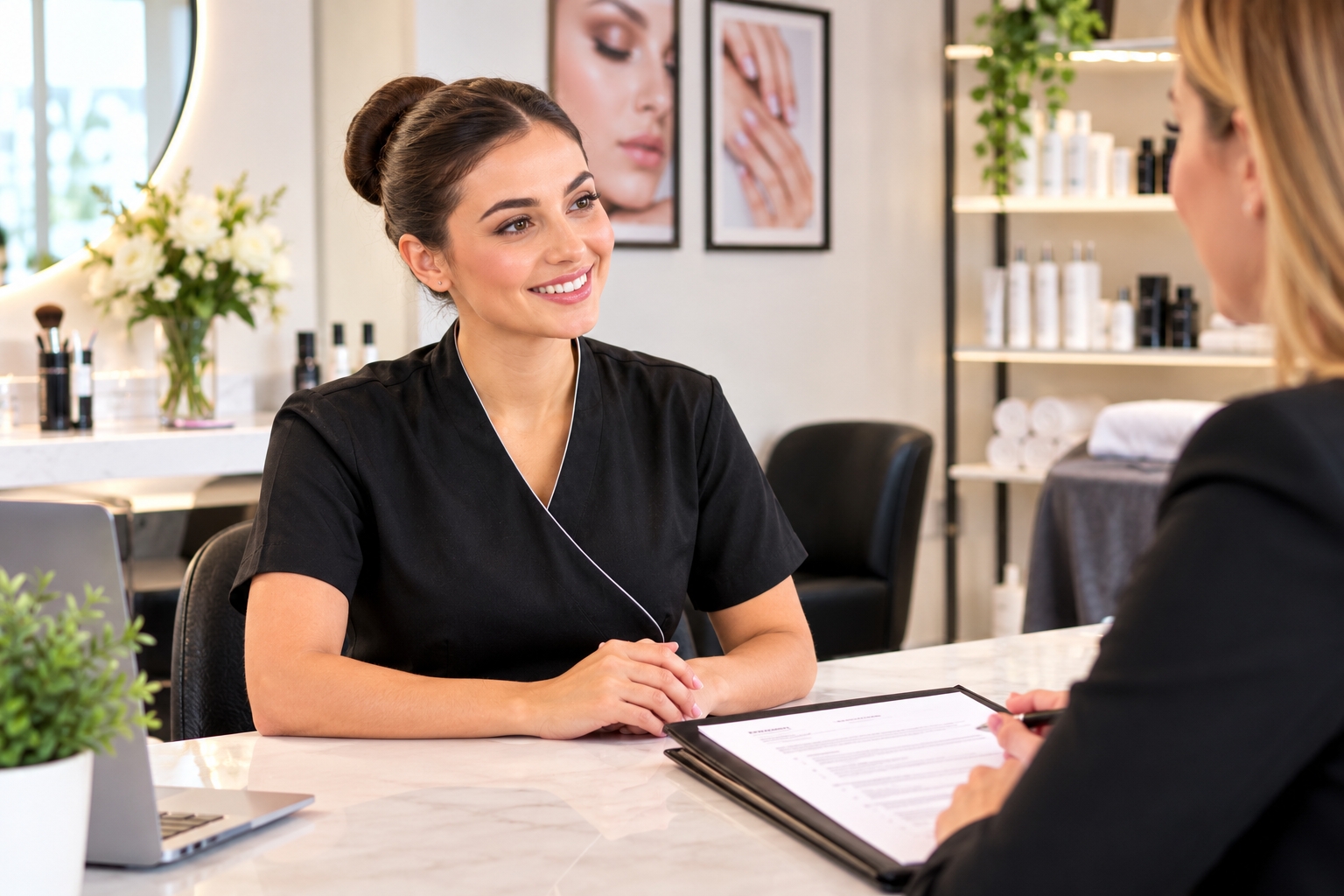
Preparing for a beauty therapist job interview tips can feel overwhelming, especially when you are unsure what to wear, what questions to expect, or how to demonstrate your professional skills. Whether you are applying for a beauty therapist, nail technician, makeup artist, lash technician, or salon receptionist position, making a positive first impression can help you stand out from other candidates.
The key to a successful beauty therapist job interview is to demonstrate your technical knowledge, personal presentation, communication skills, and enthusiasm for the beauty industry. Employers want to see that you understand salon standards, value client satisfaction, and can contribute positively to their team.
At The Nail and Beauty College, we understand the importance of preparing for a successful career in beauty. This guide covers practical beauty industry interview tips, common interview questions, professional grooming standards, and ways to build confidence before your next interview.
Why Is Preparation Important for a Beauty Industry Job Interview?
Preparing for a beauty salon interview helps you communicate confidently, demonstrate your knowledge, and show employers that you take the opportunity seriously.
Beauty professionals work closely with clients, provide personal treatments, recommend suitable products, and maintain high hygiene standards. Employers therefore look for candidates who combine practical skills with professionalism, reliability, and a client-focused attitude.
Before your interview, take time to research the salon, organise your documents, plan your outfit, and practise answering common questions. These simple steps can help you feel more confident and prepared.
10 Essential Beauty Therapist Interview Tips to Help You Stand Out
1. Do your research on the beauty salon before the interview.
Before attending your interview, learn as much as possible about the business. Visit its website and social media pages to understand its services, brand identity, and target customers.
Research the following details:
- When the salon was established and who owns or manages it.
- The beauty treatments and services it offers.
- The professional skincare, nail care, or makeup brands it uses.
- Its opening hours and typical client base.
- Any awards, specialisations, or professional achievements.
- Its approach to customer service and salon experience.
This preparation helps you explain why you want to work for that particular business. It is also a source of useful information for the discussion during the interview.
2. Choose Professional and Appropriate Interview Attire
Your appearance matters in the beauty industry because clients often associate a therapist’s presentation with the salon’s professional standards.
If you have suitable salon workwear, such as a clean beauty tunic and tailored trousers, consider wearing it. Otherwise, choose neat, well-fitted business attire that is appropriate for the workplace.
Keep these guidelines in mind:
- Wear clean, pressed clothing in a professional style.
- Choose comfortable, enclosed shoes suitable for a salon environment.
- Avoid overly casual clothing, distracting accessories, and excessively revealing outfits.
- Ensure your clothes are clean and free from stains or strong odours.
Your outfit should communicate professionalism, cleanliness, and attention to detail.
3. Maintain Neat Hair, Nails, and Personal Grooming
Personal presentation is particularly important for beauty therapists because clients expect high standards of grooming and hygiene.
Tie long hair securely away from your face and shoulders. A neat bun or another secure hairstyle can be a practical choice when demonstrating treatments.
Keep your nails clean, well-maintained, and an appropriate length for the services you may perform. If the salon has specific requirements regarding nail polish or artificial nails, follow its workplace policies.
Choose light, professional makeup if you wear it, and avoid strong fragrances that could affect clients who are sensitive to scents.
Remember, the goal is not to look glamorous at all costs. It is to demonstrate that you understand professional grooming and workplace hygiene.
4. Bring Your Resume, Qualifications, and Supporting Documents
Arriving with the correct paperwork shows that you are organized and serious about the position.
Prepare a professional folder containing:
- Several copies of your updated resume.
- Copies of relevant beauty qualifications and certificates.
- Proof of relevant training or professional development.
- References or referee contact details, where appropriate.
- A portfolio of your beauty work, if relevant to the position.
- Any additional documentation required by the employer.
If you have completed a beauty therapy course, nail technology qualification, makeup training, or lash extension training, be prepared to explain how your learning relates to the role.
Offer your documents when appropriate during the interview rather than assuming the interviewer wants them immediately.
5. Arrive Early and Make a Positive First Impression
Punctuality demonstrates reliability, a quality that is essential in a salon where appointments and treatment schedules must run smoothly.
Plan your journey in advance and aim to arrive approximately 10–15 minutes before your scheduled interview. Take into account any possible delays due to traffic conditions or transportation.
When you enter the salon:
- Greet the receptionist politely.
- Introduce yourself using your full name.
- Explain who you are meeting and why you are there.
- Maintain comfortable eye contact and use a friendly tone.
- Speak clearly and treat everyone with respect.
A calm, professional greeting helps create a positive first impression before the formal interview even begins.
6. Demonstrate Strong Communication and Customer Service Skills
Technical ability is important, but excellent communication can make a significant difference in a beauty career.
Beauty therapists need to understand client preferences, explain treatments, manage expectations, and respond professionally to concerns.
During the interview, demonstrate that you can listen carefully, communicate clearly, and remain respectful in challenging situations.
You can also discuss how you would maintain client confidentiality, explain aftercare instructions, and help clients feel comfortable during treatments.
7. Show That You Understand Hygiene and Salon Safety
Employers want beauty professionals who take cleanliness, infection control, and client safety seriously.
Be ready to discuss how you would follow workplace procedures, clean and prepare treatment areas, handle tools correctly, and maintain appropriate hygiene practices.
Depending on the role, you may also be asked about client consultations, contraindications, patch testing where applicable, and when a treatment should be postponed or referred for further advice.
Never exaggerate your experience. If you are unfamiliar with a procedure, explain that you are willing to learn and follow the salon’s training and safety protocols.
8. Highlight Your Teamwork and Willingness to Learn
Beauty salons often rely on teamwork to deliver a consistent client experience. Employees may need to coordinate appointments, support colleagues, maintain treatment rooms, and assist with daily salon operations.
Prepare examples that demonstrate your ability to:
- Work cooperatively with colleagues.
- Manage time and appointments effectively.
- Accept constructive feedback.
- Stay calm during busy periods.
- Take responsibility for mistakes.
- Learn new treatments, products, and techniques.
If you are new to the industry, you can use examples from your studies, practical training, volunteering, or previous employment.
9. Understand Retail Recommendations and Client Needs
Many beauty businesses offer skincare, nail care, and other professional products alongside their treatments. Employers may therefore look for staff who can recommend products confidently and ethically.
Explain how you would identify a client’s needs, discuss suitable options, and provide helpful product recommendations without pressuring the client.
A strong beauty professional focuses on client satisfaction and appropriate recommendations rather than simply trying to make a sale.
10. Prepare Questions to Ask the Interviewer
An interview is also your opportunity to understand the role and decide whether the workplace is right for you.
Prepare two or three thoughtful questions, such as:
- What does a typical working day look like in this role?
- What treatments and services would I perform most often?
- Do you provide training on salon products and treatment procedures?
- What qualities do you value most in your team members?
- Are there opportunities for professional development?
- What are the next steps in the recruitment process?
Asking relevant questions shows that you are interested in the position and thinking about how you can contribute to the business.
Common Beauty Therapist Interview Questions and How to Answer Them
Practicing common beauty salon interview questions can help you communicate your strengths naturally without sounding rehearsed.
1. Why Do You Want to Work in the Beauty Industry?
Explain what interests you about beauty, skincare, nails, makeup, or client care. Connect your enthusiasm to the role and mention the skills you want to develop.
2. Why Do You Want to Work at Our Salon?
Refer to something specific you discovered during your research, such as the salon’s treatments, professional approach, customer experience, or reputation.
3. What Is Your Favorite Beauty Treatment, and Why?
Choose a treatment you genuinely enjoy and explain what interests you about it. Discuss the skills involved and how the treatment can benefit clients when performed appropriately.
4. How Would You Handle Negative Client Feedback?
Explain that you would listen without interrupting, acknowledge the client’s concerns, remain calm, and follow workplace procedures to resolve the issue. If necessary, you would involve the salon manager.
5. What Are Your Greatest Strengths?
Choose strengths relevant to the position, such as attention to detail, communication, reliability, time management, client care, or practical treatment skills. Support your answer with a real example.
6. What Does Being a Team Player Mean to You?
Describe how teamwork involves communication, mutual respect, reliability, supporting colleagues, and contributing to a positive workplace.
7. Are You Comfortable Recommending Products to Clients?
Explain that you would make recommendations based on the client’s needs, treatment goals, and professional guidance. Emphasise honest communication and customer satisfaction.
8. What Are Your Career Goals for the Next One to Five Years?
Discuss realistic goals, such as improving your technical skills, gaining salon experience, specialising in particular treatments, pursuing further qualifications, or eventually managing or operating your own beauty business.
9. What Is Your Availability?
Be honest about your preferred working hours and availability for evenings, weekends, or public holidays. Explain any restrictions clearly and professionally.
10. Why Should We Hire You?
Summarise the qualities you would bring to the business, such as your enthusiasm, relevant qualifications, willingness to learn, attention to hygiene, and commitment to excellent client service.
Interview tip: Use real examples wherever possible. If you do not have previous salon experience, focus on your training, transferable skills, and readiness to learn.
What Should You Do After a Beauty Salon Interview?
Your professional approach should continue after the interview ends.
Before leaving, thank the interviewer for their time and express your interest in the opportunity. Ask about the expected recruitment timeline if it has not already been discussed.
Afterwards, consider sending a brief thank-you email within 24 hours. Mention something relevant from the conversation and politely reiterate your interest in the position.
If you do not hear back within the timeframe provided, a courteous follow-up message is appropriate.
Final Checklist Before Your Beauty Job Interview
Use this checklist to make sure you are ready before leaving home.
- Research the salon and understand its services.
- Prepare a clean, professional outfit.
- Groom your hair and nails appropriately.
- Print or organise your resume and relevant certificates.
- Review the job description and required skills.
- Practise answering common interview questions.
- Prepare questions for the interviewer.
- Plan your journey and arrive early.
- Switch your phone to silent before the interview.
- Thank the interviewer and follow up professionally.
Build Your Future in the Beauty Industry With The Nail and Beauty College
Are you ready to turn your passion for beauty into practical skills and career opportunities? The right training can help you build a strong foundation for working in beauty therapy, nail technology, makeup, and other areas of the beauty industry.
At The Nail and Beauty College, you can explore beauty training options designed to develop practical knowledge and industry-relevant skills. Depending on your career goals, you may wish to explore nationally recognised qualifications or specialised short courses.
Explore our available courses to find a suitable learning pathway for your interests and career ambitions.
Start building your beauty skills today! Visit The Nail and Beauty College website to explore available courses and take the next step towards your future in the beauty industry.
Frequently Asked Questions About Beauty Industry Job Interviews
1. What should I wear to a beauty therapist job interview?
Wear clean, professional clothing appropriate for the salon. A beauty tunic and tailored trousers may be suitable if you have salon workwear. Choose enclosed shoes, maintain neat grooming, and follow any dress code provided by the employer.
2. What questions are commonly asked in a beauty salon interview?
Common questions cover your qualifications, favourite treatments, customer service skills, availability, career goals, teamwork, and ability to handle client complaints. Employers may also ask about hygiene, safety, and product recommendations.
3. Can I get a beauty salon job without previous experience?
Yes, some entry-level positions accept candidates with limited work experience, particularly when they demonstrate relevant training, good communication, reliability, and a willingness to learn. Requirements vary depending on the role, employer, and treatments involved.
4. Do I need beauty qualifications to work as a beauty therapist?
Qualification requirements depend on the position, treatments offered, and applicable regulations. Some employers require specific qualifications or demonstrated competency, while other roles may have different entry requirements. Check the job description and relevant local requirements before applying.
5. How can I make a good impression at a beauty therapist interview?
Research the salon, arrive early, dress professionally, bring your resume and relevant certificates, and practise clear answers to common questions. Demonstrate strong hygiene awareness, client care, teamwork, and enthusiasm for developing your skills.
Ready to take your next step? Explore beauty training opportunities at The Nail and Beauty College and start preparing for a rewarding future in the beauty industry.